
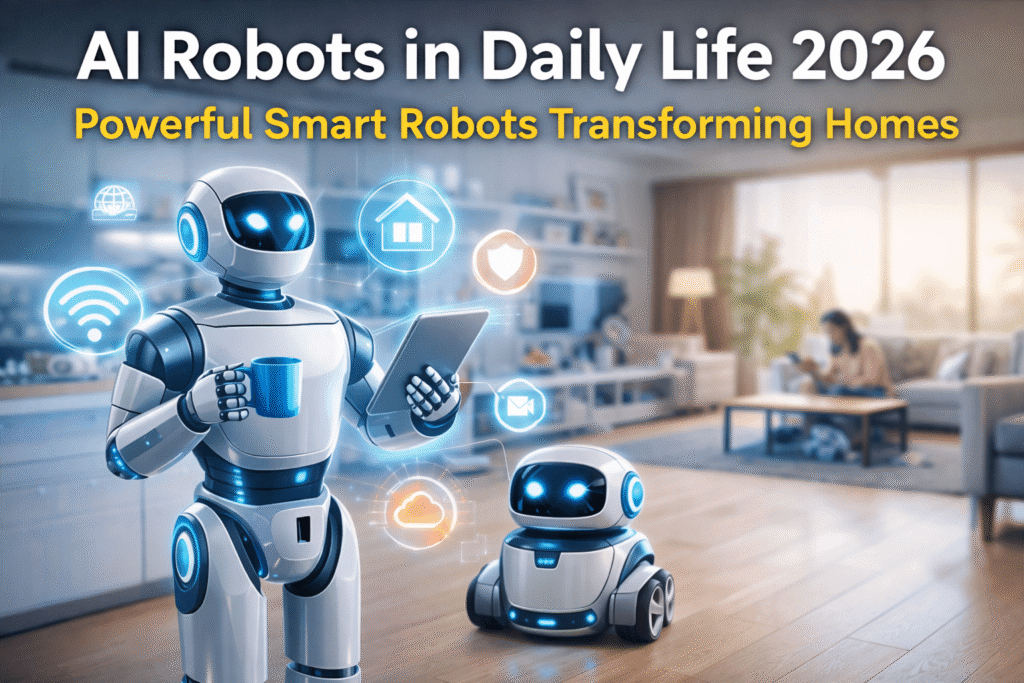
Introduction:
AI Robots Are No Longer Science Fiction
AI robots are no longer confined to movies or research labs. In 2026, they’ll emerge as an actual part of everyday lifestyles. From smart homes to places of work, AI-powered robots are helping people save time, enhance safety, and lead more comfortable lives.
Thanks to advances in artificial intelligence, device learning, and sensors, robots in domestic environments and public areas are actually smarter, more secure, and more inexpensive. Especially inside the US, the use of clever robots is growing rapidly.
This article explains how smart robots are used in everyday life, where they are employed, and why they may become more prevalent in 2026.
What Are AI Robots?
AI robots are machines that use synthetic intelligence to think, analyze, and make decisions. Unlike Conventional robots that comply with fixed instructions, AI robots can:
- Examine from experience
- Apprehend voice commands
- Find gadgets and people
- Adapt to new conditions
These functions make clever robots useful in houses, workplaces, hospitals, and cities.
How AI Robots Work in Daily Life
AI-powered robots depend upon several middle technologies:
- Machine getting to know: helps robots enhance their overall performance over time
- Computer vision: allows robots to peer and recognize items
- Natural Language Processing (NLP): permits voice interplay
- Sensors and cameras: detect movement, sound, and boundaries
- Together, these structures allow robots to act as human assistants instead of machines.
👉Learn more about the key technology in our manual to gain knowledge of it.
AI Robots in Home Automation
Smart Home Cleaning Robots
One of the most common robots used in the home is for cleaning. By 2026, AI-driven machines can:
- Create an accurate map of rooms
- Avoid pets and fixtures
- Clean particular areas on command
- Know the daily agenda
Robotic vacuum cleaners and mopping robots are now standard in lots of American homes.
AI Robots for Home Assistance
Smart robots now help with everyday responsibilities, which include:
- Turn the lighting on/off
- Test the temperature
- Reminiscence of drugs
- Solution questions
These smart robots are particularly beneficial for elderly individuals and those with disabilities.
AI Robots in Healthcare and Elderly Care
Healthcare is one of the fastest-growing areas for AI robots.
Robot for domestic healthcare
In 2026, robotic assistants will assist patients:
- Monitoring of essential symptoms
- Reminding sufferers to take the medication
- Notify medical doctors in case of an emergency
These robots reduce medical institution visits and enhance the best of home care.
👉According to the World Health Organization, AI-based healthcare solutions are improving patient outcomes globally.
AI Robots in Workplaces
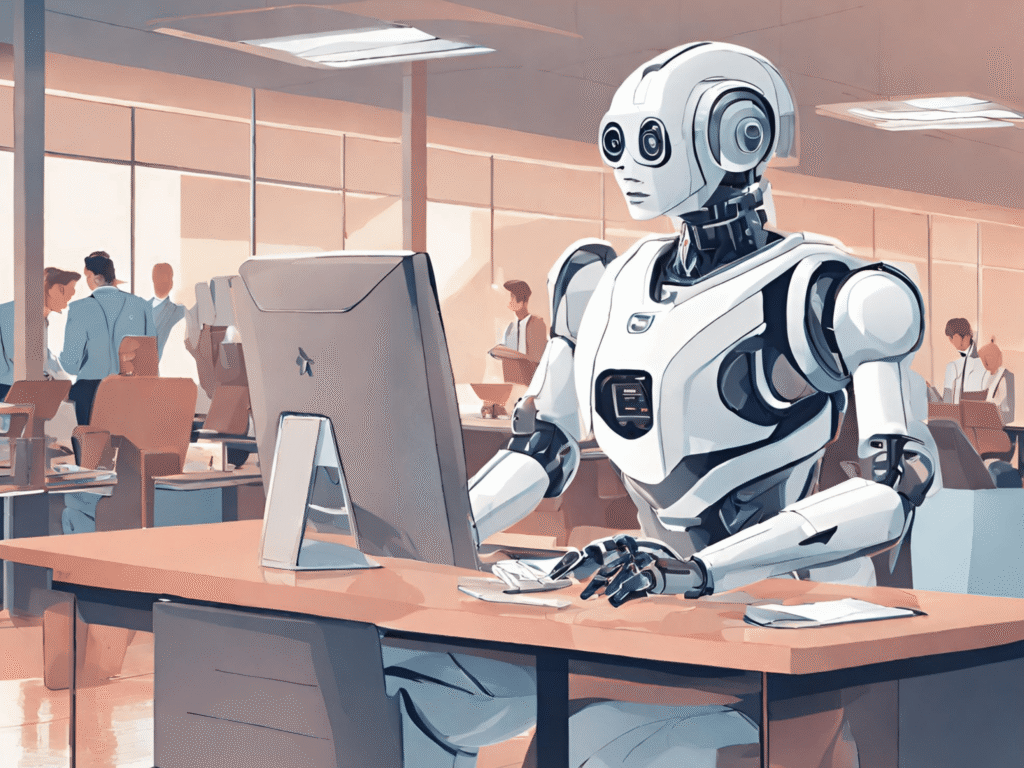
Office and Business Robots
AI robots are actually utilized in offices:
- Agenda meetings
- Manage files
- Handle consumer queries
- Automate repetitive obligations
This facilitates organizations’ shop time and consciousness on creativity and strategy
Warehouse and Delivery Robots
In the USA, logistics agencies rely upon AI-powered robots for the following duties:
- Type applications
- Circulate items correctly
- lessen human error
Smart robots work around the clock, making deliveries faster and more dependable.
AI Robots in Education
AI robots are also converting the mastering surroundings.
Clever studying assistant
In classrooms and online, gaining knowledge of automated robots can:
- Put together textual content
- Answer the scholars’ questions
- Adjust the pace of gaining knowledge
- It makes training more interactive and powerful.
👉Read how immersive technology supports learning in Virtual Reality in Education
AI Robots in Everyday Public Spaces
By 2026, AI robots will be seen in many public areas:
- Steering of airport passengers
- Resort for the room provider
- Shopping center for customer support
- Medical institution for navigation
These bots improve efficiency and consumer revenue.
Benefits of Smart Robots
1. Saves time
Intelligent machines handle recurring duties, giving human beings greater free time.
2. Better protection
Robots can detect dangers and prevent accidents at home and inside the workplace.
3. Better get right of entry to
Smart robots assist the elderly and disabled.
4. Increase in productivity
Businesses become faster and more efficient.
Challenges of AI Robots
Despite the benefits, AI-driven machines still face demanding situations:
- High initial cost
- Privacy worries
- Dependence on the net connection
- Need for normal updates
However, those issues decrease each year with ongoing improvement.
The Future of AI Robots Beyond 2026
The destiny of AI robots seems very promising. Experts expect:
- More low-priced domestic robots
- Emotionally conscious AI assistant
- Robots with higher human interplay
- Deep integration with smart houses
AI robots turn into dependable companions rather than equipment.
Final Thoughts: Why Home Robots Matter in 2026
Home robots are reshaping the way we stay, work, and interact with each other. From robots in home automation to clever healthcare and commercial enterprise solutions, their impact is developing each day.
As artificial intelligence keeps improving, smart robots will become more secure, smarter, and more useful, making ordinary lifestyles less complicated for millions of people.
Call to motion (CTA)
Do you need to explore future generation tendencies along with smart robots and smart automation?
👉 Visit our website for expert insights and updates:
Be at the forefront of the present day in AI, robotics, and new technology