
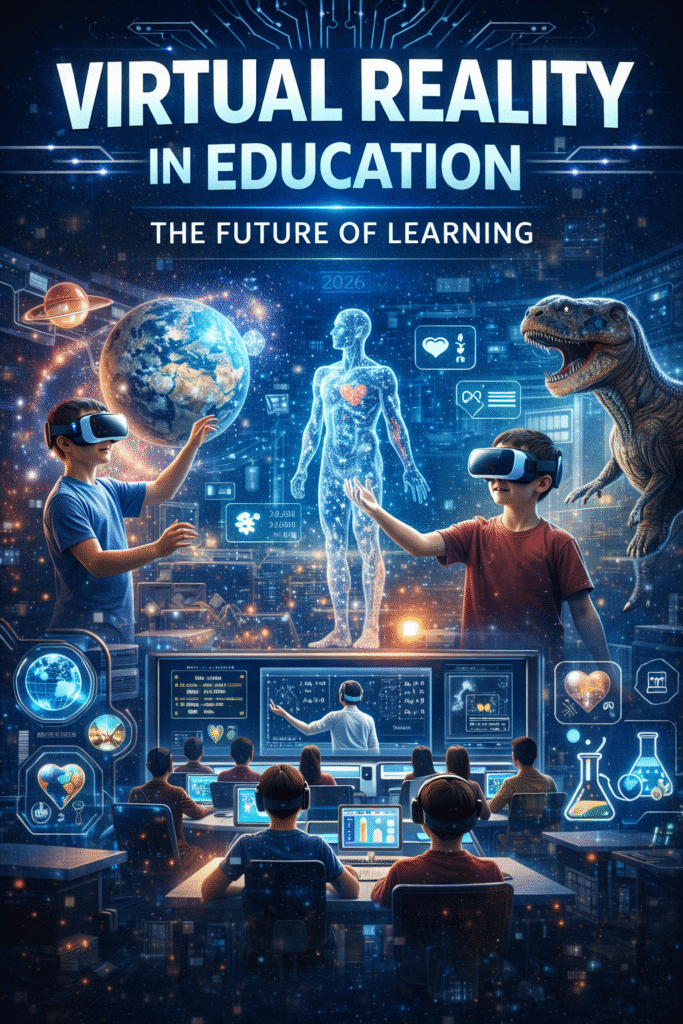
Introduction:
VR in Education Is Changing Learning Forever
VR in schooling is not a futuristic idea – it’s already changing the way college students learn around the world. Virtual Reality (VR) creates a completely immersive learning environment where students can see, listen, and engage with instructions rather than simply reading books or watching videos.
From digital classrooms to immersive learning experiences, VR makes schooling more engaging, practical, and easier to understand. By 2025 and beyond, colleges and online studying platforms will rely more heavily on VR to improve student outcomes.
This article explains how digital reality works in education, why it’s crucial, and the way it’s going to shape the destiny of education.
What Is Virtual Reality in Education?
Virtual reality in schooling manner using VR generation to create digital learning environments wherein students can engage in instruction in 3-D.
With the VR headset, college students can:
- Go to historical sites
- Discover the human body
- Do technological know-how experiments
- Attend virtual lessons from everywhere
Instead of visualizing ideas, students experience them directly – that is known as immersive learning.
How VR in Education Works
VR learning typically includes 3 important elements:
1. VR hardware
Students use VR headsets to:
- Meta quest
- Htc vive
- Google Cardboard (cheap alternative)
2. Educational VR software program
- Specialized apps create instructions, simulations, and virtual lecture rooms.
- Three. Interactive content material
- The college students engage with objects, environments, and instructors in the virtual global.
- This aggregate makes learning extra sensible and remarkable.
Benefits of VR in Education
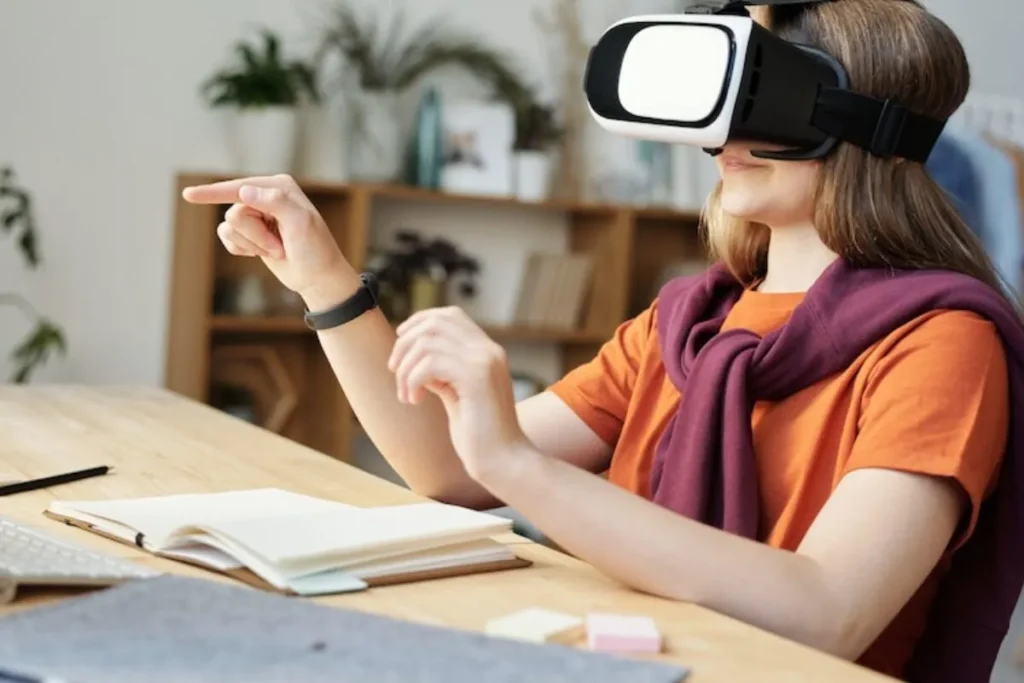
1. Intensive gaining knowledge of revel in
Immersive getting to know allows college students to apprehend complex topics without difficulty. Instead of analyzing planets, college students can go to the sun machine.
This improves:
- Consciousness
- Memory
- Conceptual clarity
2. Better student engagement
Traditional lessons can seem boring. VR makes coaching exciting and interactive.
Students are nonetheless involved because:
- Getting to know seems like an exploration
- The training is visible and sensible
- Distractions are reduced
3. Virtual school room for distance learning, knowledge of
A virtual study room allows college students and teachers to collaborate in a shared virtual space.
The advantages consist of:
- worldwide get right of entry to education
- Actual time verbal exchange
- No bodily school room required
- It is a web education platform and ideal for distance learning newbies.
4. Safe, realistic schooling
Some topics require practice; however can be volatile or pricey.
VR permits safe education for:
- Scientific surgical treatment
- Engineering simulation
- Chemistry experiments
- Aviation schooling
- Students could make errors without a real threat.
VR in Education for Different Fields
VR in Schools
Schools use VR to:
- Geography tourism
- Clinical laboratories
- Records lesson
- Analyze language
Young beginners study faster from pictures and conversations.
VR in higher schooling
Colleges and universities use VR to:
- Clinical schooling
- Architectural design
- Engineering simulation
- Studies experiment
VR complements ability-based getting to know.
VR in expert schooling
Companies use VR to educate personnel.
Example:
- Clinical employees exercise surgical treatment
- Engineers learn how to design machines
- Teachers take education in digital school rooms
- This reduces education expenses and improves outcomes.
Role of Immersive Learning in the Future
Immersive getting to know you is the future of education because it connects experience with expertise.
Why immersive getting to know you works:
- Students research by doing
- Standards emerge as simpler
- Knowledge lasts longer
Studies display that VR college students recall instructions more than conventional college students.
Challenges of VR in Education
Although VR is strong, it has a few demanding situations:
1. High fee
VR gadgets may be pricey for schools.
2. Technical competencies required
Teachers want students to apply VR gear properly.
3. Restricted Content
Educational VR content continues to be on the upward push.
Despite those demanding situations, expenses are falling each year.
Future of VR in Education (2026–2030)
The destiny of VR in education appears very robust.
Expected traits:
- lower-priced VR headsets
- AI-powered digital instructor
- personalized immersive getting to know you
- VR-based examination and evaluation
- completely virtual college
VR will become an everyday part of schooling, no longer a luxury.
How VR Supports Smart Learning Technologies
VR works well with other technologies like AI and smart systems.
You can also explore related tech topics:
For global insight, you can reference:
(Future of education technology)
Why Educational Websites Should Cover VR Topics
Writing about digital reality in schooling allows:
- Attract era-centered readers
- Rank for destiny-geared-up keywords
- Build authority in academic technology
- Increase organic visitors over the years
This theme has a long-term search engine optimization fee.
In conclusion, VR in education is the destiny of studying
Virtual truth in education is converting the way people research, educate, and learn. From immersive learning experiences to revolutionary virtual lecture rooms, VR makes training extra realistic, attractive, and effective.
As generation improves and expenses decrease, VR becomes a trendy learning device in colleges, universities, and online platforms. The destiny of learning is immersive, and VR is leading it.
CTA (Call to Action)VR in education
Do you want to explore destiny-driven technology traits, including VR, AI, and smart structures?
👉 Visit our website for expert insight and today’s updates: