Introduction:
01:AI in Healthcare Is Changing Everything
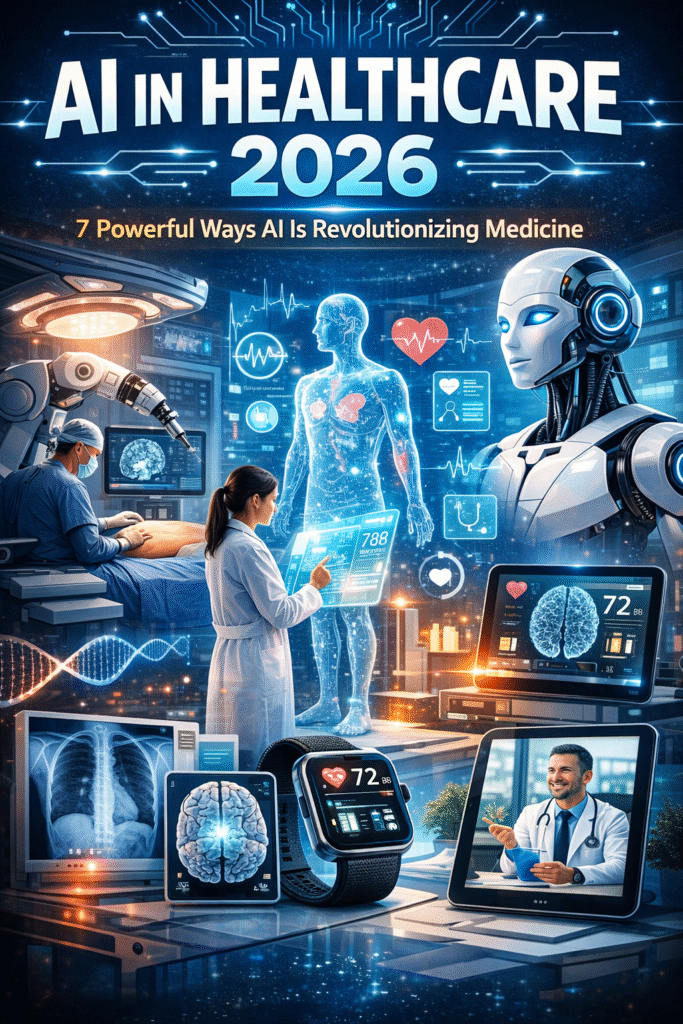
AI in healthcare is no longer a concept of the future. By 2026, synthetic intelligence will be actively changing how medical doctors diagnose diseases, how hospitals deal with patients, and how healthcare works around the world.
From early disease detection to personalized remedy plans, AI-powered healthcare improves accuracy, pace, and patient protection. Hospitals, clinics, or even home care are now using artificial intelligence to offer better and faster medical care.
In this article, we’re going to explore the effective, real-world methods AI will revolutionize healthcare in 2026 and why it matters to patients and medical professionals.
02:How AI in Healthcare Improves Medical Diagnosis
One of the largest breakthroughs for AI in healthcare is medical prognosis. AI systems can examine massive amounts of scientific statistics in seconds – something humans cannot do without difficulty.
Main advantages of AI-powered diagnostics:
- Early detection of most cancers, coronary heart disorders, and neurological disorders
- AI analysis of X-ray, MRI, CT test, and laboratory reports
- Human error in diagnosis decreased
- Faster choice-making for docs
AI fashions are educated on tens of millions of medical pics and patient records, which can detect patterns that the human eye might miss.
03:AI in Patient Care: Personalized & Predictive Treatment
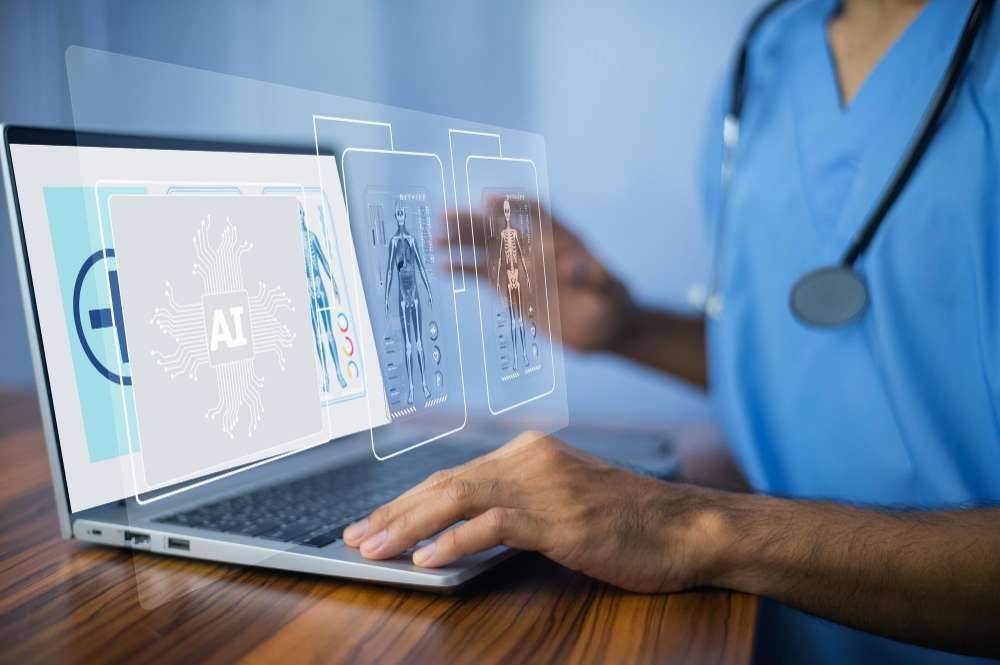
AI patient care will become more personalised in 2026. Instead of a one-length-fits-all treatment, AI analyzes a patient’s history, genetics, way of life, and fitness records in real time.
How AI improves patient care:
- Individual treatment plans
- Predictive alerts before the fitness situation deteriorates
- AI chatbots assist patients 24/7
- Faster healing and higher results
AI-powered wearables can constantly reveal coronary heart rate, blood pressure, and oxygen levels, sending signals to the doctor when needed.
04:AI-Powered Medical Imaging: Faster & More Accurate
Medical imaging has changed dramatically because of AI in healthcare. AI equipment assists radiologists with the aid of quickly highlighting capability issues.
AI in photograph processing helps with:
- Tumor detection in early stages
- Identification of fractures and internal damage
- lessen experiment evaluation time
- Improve the accuracy of the news
Hospitals using AI imaging tools record 20-30% improvement in diagnostic accuracy, making diagnosis faster and more reliable.
05:AI in Robotic Surgery: Precision at Its Best
Robotic surgery blended with AI is one of the most effective fitness innovations in 2026.
Advantages of AI-assisted surgical operation:
- Extremely unique actions
- Small incisions
- Much less pain and blood loss
- Quicker restoration time
The AI system guides surgeons in real time, supporting them keep away from severed nerves and blood vessels.
This makes complex operations more secure and even more successful than ever before.
06:AI in Drug Discovery and Medical Research
The discovery of traditional medicine can take 10-15 years. With AI, this timeline is shrinking unexpectedly.
How AI is rushing up drug discovery:
- Predicts how pills will react in the frame
- Quickly identifies promising connections
- Reduces study expenses
- Accelerating clinical trials
AI has played a first-rate role in vaccine research and will continue to convert scientific innovation.
07:AI in Hospital Management and Administration
AI now not only facilitates doctors, but it also improves health center operations.
AI enables hospitals:
- Manage patient records automatically
- Optimizing employees plans
- Reduce paperwork
- Predict the affected person’s admission rates
This way, healthcare employees can focus extra on patient care in preference to administrative duties.
Challenges of AI in Healthcare
Despite its blessings, AI in healthcare also brings challenges:
- Privacy worries
- AI bias because of poor schooling facts
- Excessive implementation fees
- Want strict guidelines
Healthcare businesses need to make sure the moral use of artificial intelligence and robust tips for data protection.
The Future of AI in Healthcare Beyond 2026
Looking ahead, AI will continue to expand:
- Mental health tracking
- Virtual doctor and AI assistant
- Faraway surgical treatment
- AI-powered health predictions
AI will make healthcare more available, cheap, and green internationally.
Final Thoughts: Why AI in Healthcare Truly Matters
AI in healthcare does not replace docs – it empowers them. By combining human understanding with smart machines, healthcare will become smarter, more secure, and more patient-centric by 2026.
As AI generation continues to strengthen, patients will enjoy faster diagnoses, better remedies, and a higher quality of life.
Call to action (CTA)
Do you need to stay updated on AI, health era, and destiny innovations?
👉 Visit our website for expert perception: